Description
Chord Electronics Mojo 2 4.4mm: the British portable DAC gets a makeover
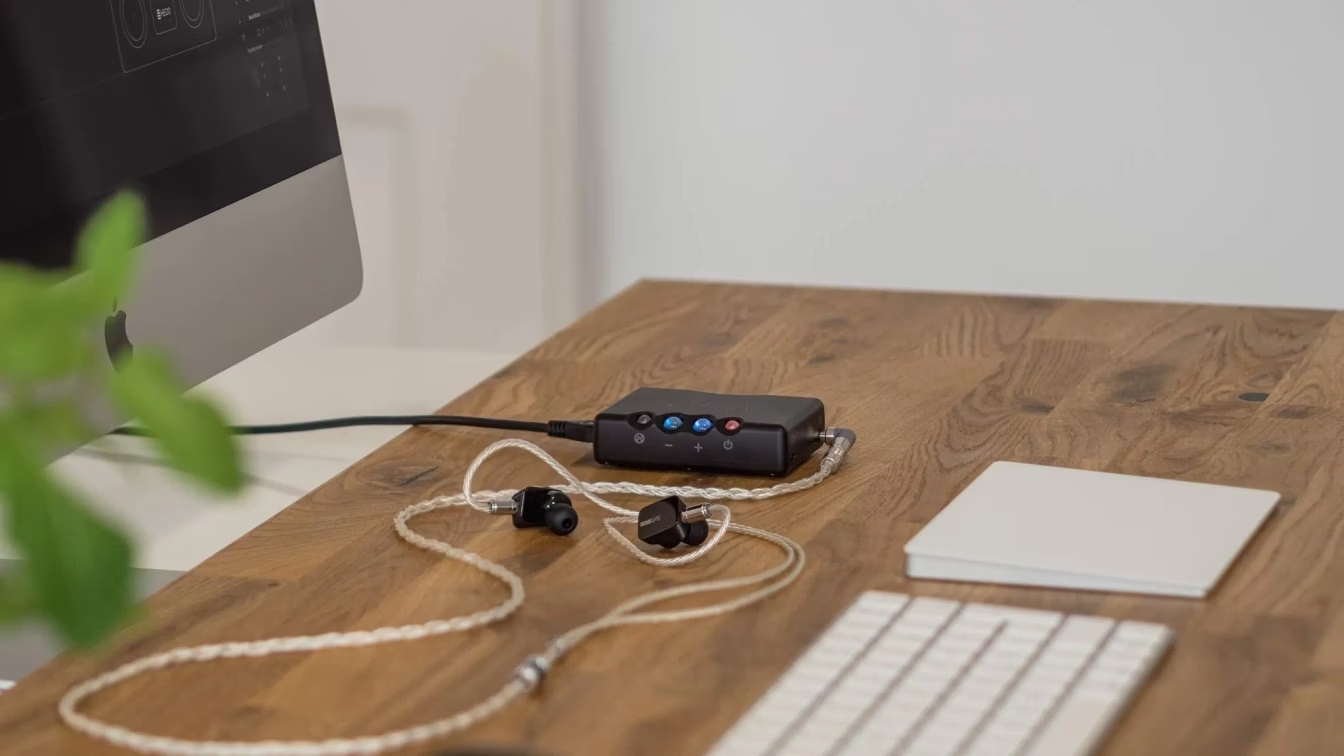
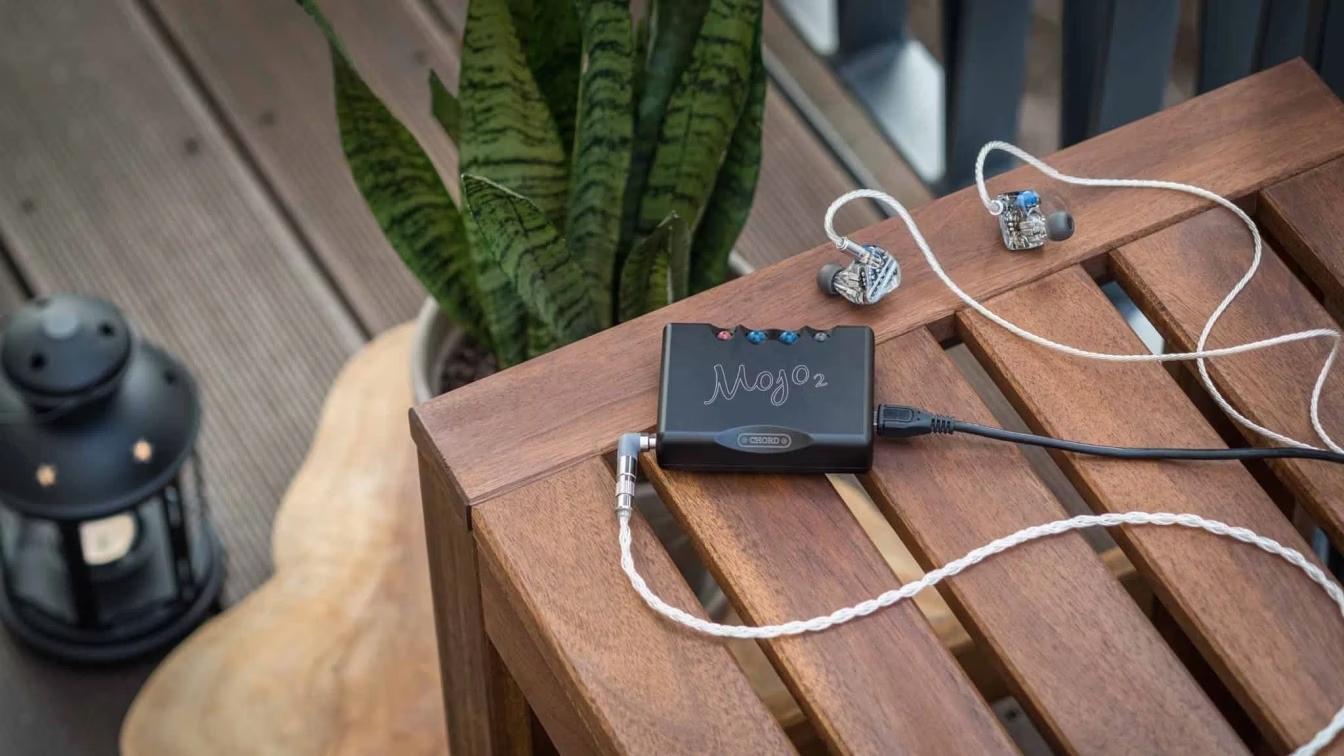
The Chord Electronics Mojo 2 4.4mm is the long-awaited evolution of the British brand’s famous portable audio converter. This updated version retains all the technologies that made the device’s reputation — proprietary FPGA processor, lossless 104-bit UHD DSP, 40-core WTA filtering — while addressing two long-standing user requests: the addition of a 4.4 mm headphone output and the ability to charge via USB-C.4.4 is the long-awaited evolution of the British brand’s famous portable audio converter. This updated version retains all the technologies that made the device’s reputation — proprietary FPGA processor, lossless 104-bit UHD DSP, 40-core WTA filtering — while addressing two long-standing user requests: the addition of a 4.4 mm headphone output and the ability to charge via USB-C.

Build and ergonomics: aerospace-grade aluminium serving portability
The Mojo 2 4.4 keeps the compact format that made the range so successful: 83 × 62 × 22.9 mm for a weight of 185 grams. The chassis is CNC-machined from a block of aerospace-grade aluminium, then bead-blasted and black anodized. This monobloc construction ensures structural rigidity and electromagnetic shielding of the internal circuits.
Control is via four translucent polycarbonate spheres, illuminated by LEDs according to a polychromatic colour code. Two large spheres control the volume, while the two smaller ones respectively control power and access to the menu. This latter button, added on the Mojo 2 compared with the first generation, provides access to advanced functions: equalization, crossfeed, control lock, LED brightness, and USB-C charging management.
The control spheres are now fixed, unlike on the first Mojo where they could rotate freely — a source of rattling that some users found annoying. The colour code, although confusing at first, follows a rainbow logic: from red (bass) to blue (treble) for equalization, and from red (44.1 kHz) to white (DSD) to indicate sampling frequency.
New connectivity: 4.4 mm output and versatile USB-C
The most visible change on the Mojo 2 4.4 concerns the front panel: one of the two 3.5 mm jack outputs has been replaced by a 4.4 mm Pentaconn socket. This format, adopted by many high-end headphones and earphones, allows direct use of balanced-terminated cables without an adapter.
One technical point is worth clarifying: the Mojo 2’s internal analogue signal path remains single-ended. Conversion to a signal compatible with 4.4 mm connectors takes place at the socket itself. We therefore speak of a “pseudo-balanced” output rather than a truly balanced end-to-end architecture. This approach nevertheless offers the practical advantages of the 4.4 mm connector: compatibility with existing cables, better mechanical robustness, and ease of use.
Another practical improvement: each output now has its own volume memory. You can therefore connect in-ear monitors to the 3.5 mm jack and an over-ear headphone to the 4.4 mm socket without having to readjust the volume level every time you switch.
On the power side, the USB-C port now handles both audio data and battery charging. This long-requested feature can be enabled in the menu. A small engraved “lightning bolt” symbol above the port identifies units equipped with this function. The micro-USB port is retained to maintain compatibility with the Poly streaming module, which connects directly to this interface.